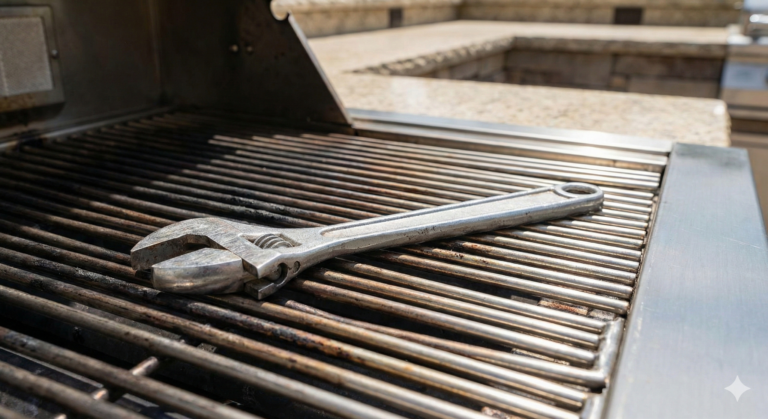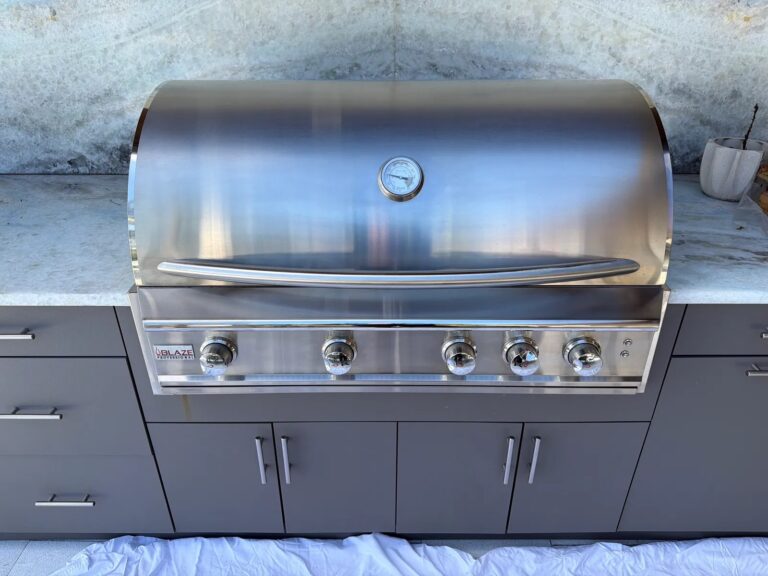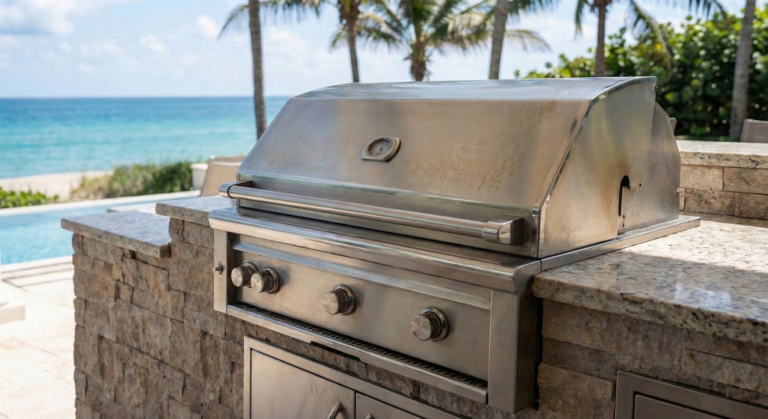
You invested in a premier built-in outdoor kitchen with heavy 304 stainless steel, expecting it to remain flawless for decades. Yet after a few seasons of humid South Florida weather, you notice an unwelcome sight: small orange speckles, brownish streaks, and rough pitting spreading across the polished hood.
This phenomenon—known in the marine and architectural industry as “tea-staining”—causes immense frustration for luxury homeowners in Boca Raton, Palm Beach, and Miami Beach. Here is the metallurgical truth about why “rust-proof” steel corrodes in coastal Florida, and how aggressive DIY cleaning methods permanently destroy your appliance.
The Metallurgy: Why 304 Stainless Steel Pits
No steel is entirely immune to corrosion. Premium commercial grills are manufactured from Grade 304 austenitic stainless steel, which contains approximately 18% chromium and 8% nickel. The steel resists rust because chromium reacts with oxygen in ambient air to form a microscopically thin, invisible surface shield called a passive chromium oxide film ($Cr_2O_3$).
As long as this passive oxide layer remains intact, the underlying iron is protected. However, within 10 to 15 miles of the Atlantic coastline, the air is saturated with microscopic airborne droplets of sodium chloride (marine salt). These aggressive chloride ions penetrate and break down the chromium oxide film faster than natural oxygen can rebuild it.
Once chlorides breach the passive barrier, free iron molecules in the alloy oxidize, producing unsightly brown pitting. If left unaddressed, surface tea-staining evolves into deep structural micro-corrosion that permanently ruins the satin finish.
The Costly DIY Mistakes That Ruin Luxury Grills
When brown spots appear, homeowners frequently turn to aggressive household cleaners, unintentionally inflicting permanent mechanical damage:
- Steel Wool & Carbon Steel Wire Brushes: Scrubbing stainless steel with common steel wool or stiff wire brushes embeds microscopic carbon steel particles directly into the softer 304 alloy. These foreign iron particles rust immediately in Florida’s humidity, creating a severe rust outbreak far worse than the original issue.
- Bleach & Chlorine Cleaners: Household sanitizers containing sodium hypochlorite (bleach/chlorine) are fatal to stainless steel. Chlorides violently attack the grain boundaries, leading to irreversible chemical pitting.
- Scrubbing Across the Grain: Luxury grills feature a directional satin finish (#4 architectural grain). Scrubbing in circular motions with abrasive pads cuts across these micro-grooves, creating cloudy, permanent swirl blemishes that cannot be wiped away.
The Professional 3-Phase Restoration Protocol
Restoring coastal stainless steel requires a disciplined, multi-step process that cleans, chemically passivates, and seals the metal:
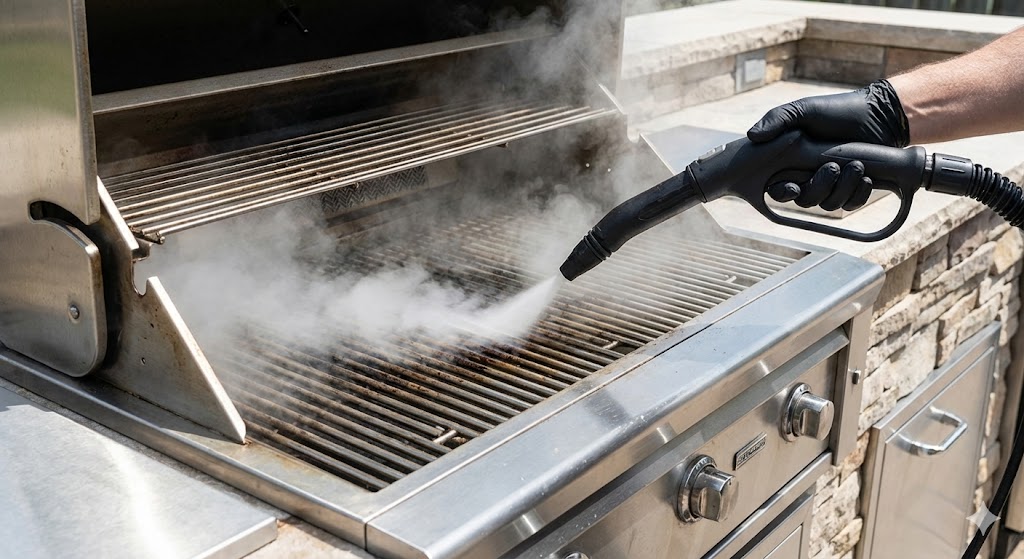
Phase 1: Deep Alkaline De-greasing: Before any metal restoration can begin, baked-on grease, animal fats, and coastal grime must be stripped using commercial, food-safe alkaline agents. Abrasive polishing over an uncleaned grease film simply grinds organic contaminants deeper into the grain.
Phase 2: Passivating Oxidation Removal: Technicians utilize specialized, non-chlorinated chemical compounds and non-metallic abrasives worked strictly parallel to the factory grain lines. This removes iron oxides and free iron without scratching the satin finish, restoring the alloy’s natural chromium passivating capacity.
Phase 3: Hydrophobic Marine Barrier Sealing: This is the step amateur cleanings always miss. Once the steel is stripped and passivated, it is temporarily vulnerable. Professionals apply a specialized, heat-tolerant marine protective sealant that bonds to the micro-pores of the steel. This hydrophobic barrier forces airborne salt mist and rainwater to bead up and roll off, preventing chloride penetration for months.
Protect Your Investment With Professional Care
Your luxury outdoor kitchen is a significant architectural investment. Preserving its mirror-bright appearance and structural integrity requires professional-grade chemistry and delicate craftsmanship. At FL Grill Services, we provide complete on-site decontamination and stainless steel restoration across Palm Beach, Broward, and Miami-Dade.
Don’t let salt air pit your outdoor kitchen. Explore our specialized premium grill cleaning and restoration services or contact our team to schedule an on-site restoration visit.
FL Grill Services Technical Team
FL Grill Services provides white-glove technical diagnostics, precision burner tuning, deep restoration, and certified fuel gas safety inspections for luxury outdoor kitchens across South Florida estates. All diagnostic and repair craftsmanship is backed by our 30-Day Workmanship Guarantee.