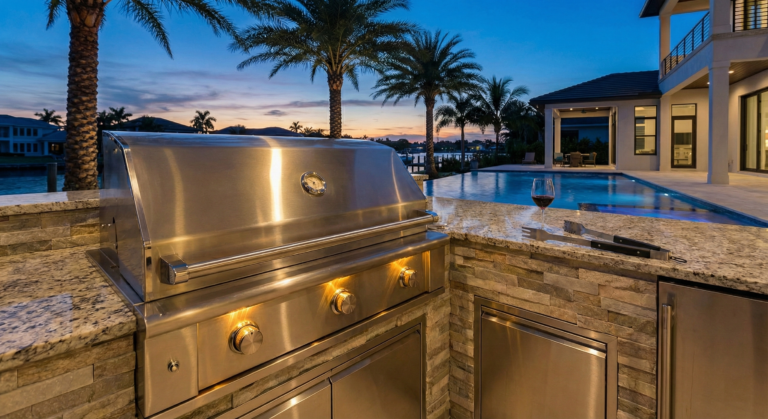
When it comes to outdoor grilling, safety should always be your top priority. As licensed gas professionals, we frequently encounter various DIY setups and backyard grill stations. While many look great visually, some pack hidden hazards that can put your home and family at serious risk.
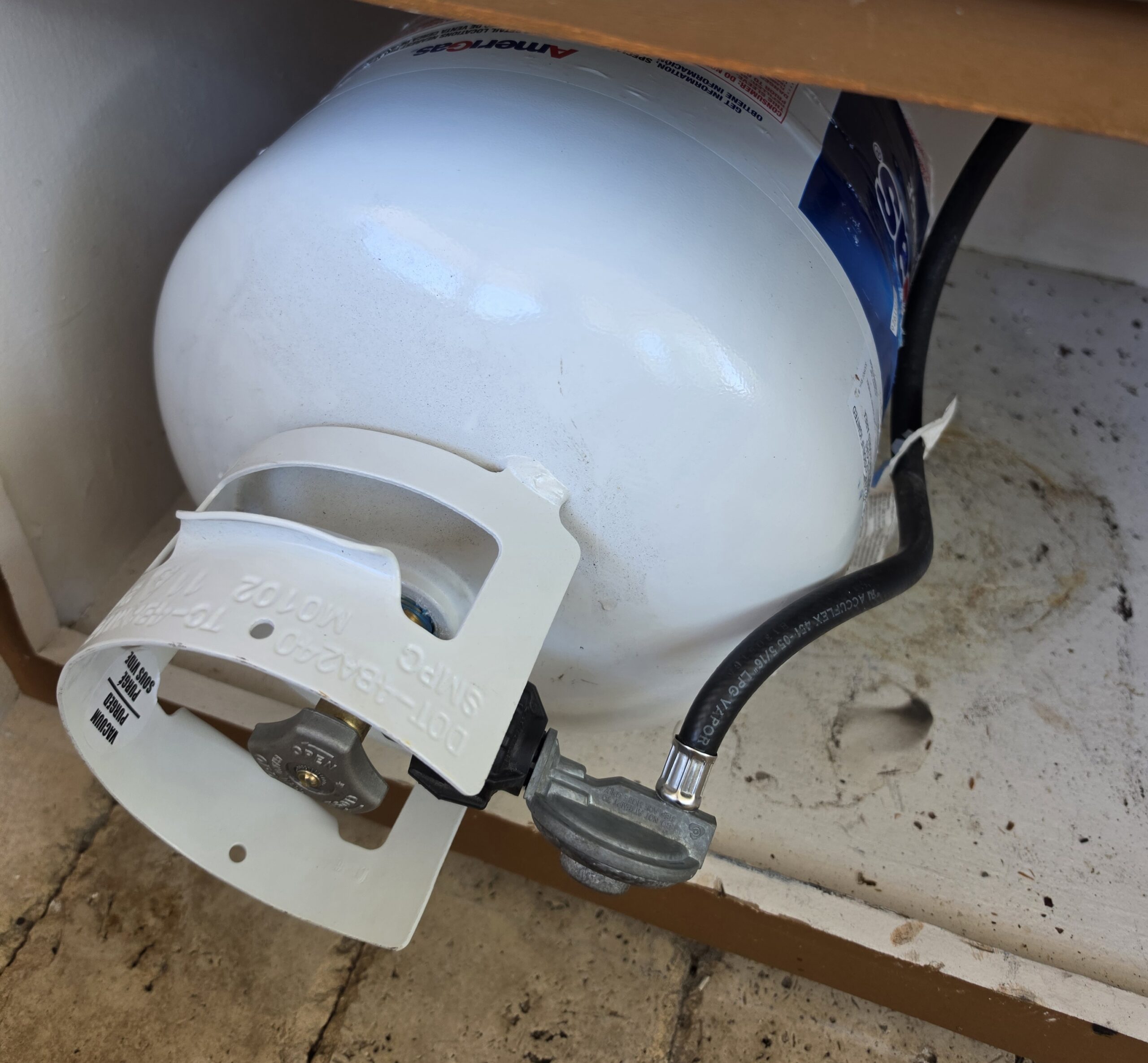
Take a look at the image below. At first glance, it seems like a standard propane tank neatly connected to a built-in BBQ grill under a stone countertop.
But there is a major, potentially catastrophic error here: The propane tank is lying on its side.
The Golden Rule: Propane Tanks Must Stay Upright
Standard portable propane cylinders (like the common 20lb tanks used for backyard grills) are engineered, tested, and legally required to operate strictly in an upright, vertical position.
When a tank is forced into a tight cabinet sideways, it bypasses the critical safety mechanisms designed into the cylinder. Here is exactly why tipping a tank over is so hazardous:
1. Liquid Propane Leakage
Inside the cylinder, propane exists in two states: liquid at the bottom and pressurized gas vapor at the top. Your grill’s pressure regulator and hose are designed to process vapor only. When you lay a tank on its side, the liquid shifts, submerging the main valve. Opening the valve in this position sends highly concentrated liquid propane rushing directly into the hose and regulator.
2. Extreme Fire and Explosion Hazards
When liquid propane escapes into the low-pressure hose, it expands rapidly into a gas (expanding up to 270 times its liquid volume). This causes a massive, sudden surge in pressure. The result? Your grill can experience a massive, uncontrollable flare-up, melted hoses, a catastrophic fire, or even a violent explosion.
3. Safety Relief Valve Malfunction
Every certified propane tank features a pressure relief valve designed to safely vent gas vapor if the tank gets too hot or overpressurized. If the tank is resting horizontally, this safety valve becomes covered in liquid propane. If the tank overheats, it will vent liquid instead of vapor, creating a severe liquid fire hazard right under your grill.
What to Do If Your Tank Doesn’t Fit
The most common reason people lay a tank on its side is because their grill cabinet or island cutout isn’t tall enough. If you find yourself in this situation, never force it sideways. Instead, take one of these safe approaches:
- Relocate the Tank: Place the tank completely upright on a flat, stable, and well-ventilated surface right next to the grill island.
- Use a Smaller Cylinder: If height is the issue, look into smaller vertical tank sizes (like an 11lb cylinder) that can safely stand upright in the space, provided it still meets your grill’s operational requirements.
- Convert to a Dedicated Gas Line: If you have a permanent outdoor kitchen, consider having a licensed Master Qualifier transition your system to a permanent natural gas line or a larger, professionally installed LP setup.
Quick Backyard Safety Checklist
Before you light up the grill for your next barbecue, take 30 seconds to run through this quick inspection:
- Orientation: Is the propane tank standing perfectly upright?
- Stability: Is the tank secured in a tank holder or on a level base so it cannot tip over?
- Hose Integrity: Are the gas hoses free of kinks, tight twists, or pinches against the cabinet edges?
- Connections: Have you checked the connections for leaks recently using a soap-and-water solution?
Let the Professionals Handle Your Grill Safety
Preventative maintenance and proper installation keep your outdoor kitchen safe and your food tasting great. If you are unsure about your current setup, need a safety diagnostic, or want to ensure your high-end grill is operating exactly as it should, we are here to help.
Contact FL Grill Services today to schedule a professional inspection, deep cleaning, or system diagnostic. Safe grilling!